A Very Midcentury Christmas
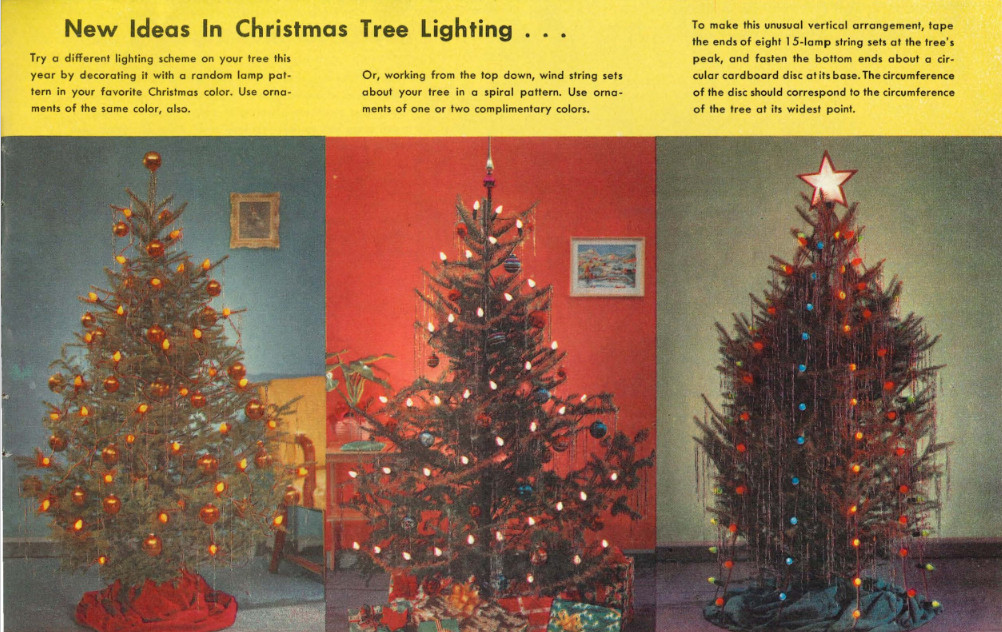
Decorating the Christmas tree has been one of the most familiar of holiday traditions. In the 1950s and ‘60s, that tradition began to take on a distinctly new modern look. As innovative ideas in architecture, furniture and design gained popularity, those influences began shaping how Christmas trees were presented. Traditional evergreens featured increasingly elaborate lighting, shimmering tinsel, and colorful glass ornaments that reflected the optimism and futuristic styling of the postwar years.
But nothing captured the spirit of the times quite like the aluminum Christmas tree.
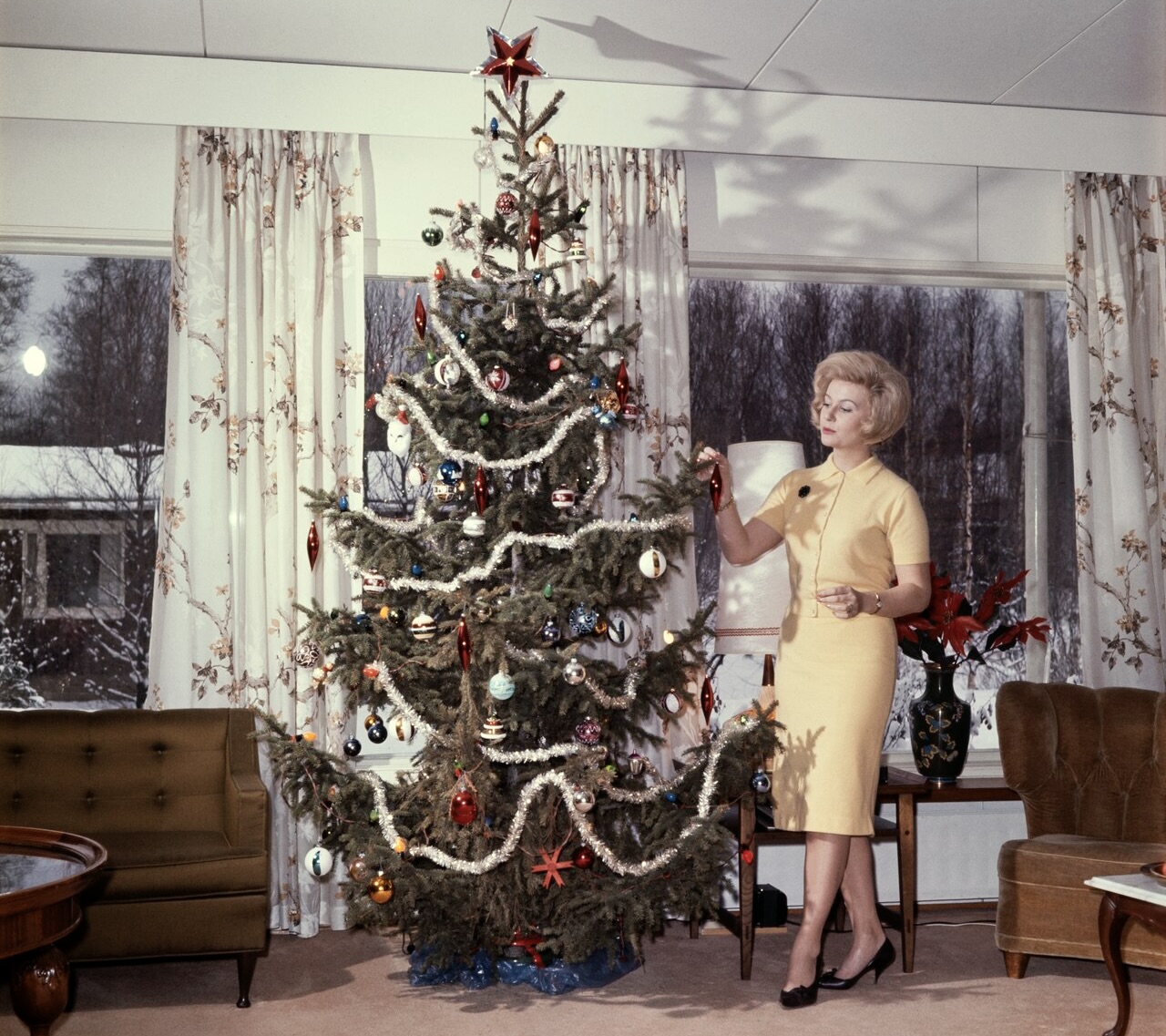
Introduced in the late 1950s, aluminum trees became a popular alternative to traditional evergreens. Wisconsin-based Aluminum Specialty Company helped launch the craze with its Evergleam trees, whose metallic branches reflected light and gave the familiar Christmas tree an entirely new appearance.
Available in silver and a range of other colors, aluminum trees were particularly well suited to the modern interiors of the period. And because conventional electric lights weren’t recommended for use directly on their metallic branches, rotating color wheels became a popular accessory. Positioned near the base of the tree, they projected changing colors onto the reflective boughs.
It was Christmas, Space Age style!
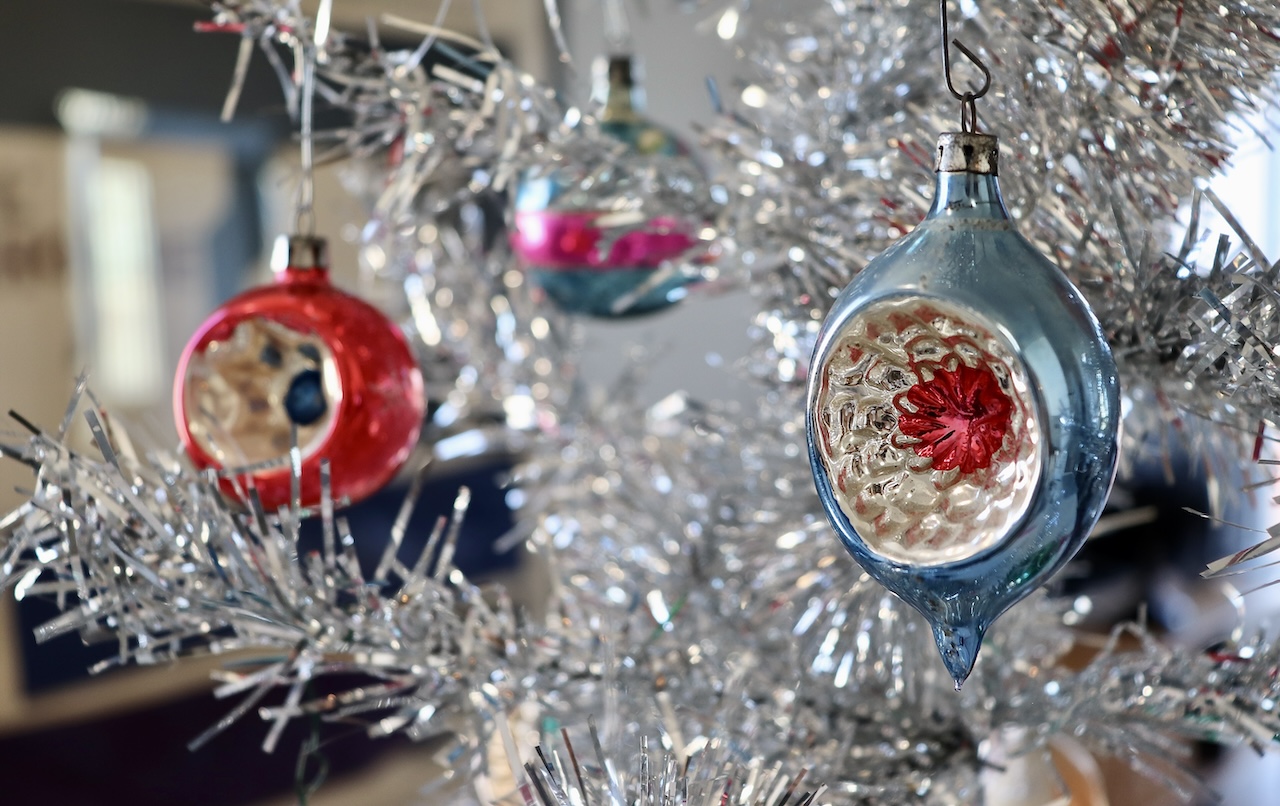
The modernist influence didn’t stop there. Glass ornaments appeared in elongated teardrop and starburst shapes, while Sputnik-inspired decorations and tree toppers reflected the excitement surrounding the Space Race. Metallic garlands, colorful electric lights, and other novelty decorations added to the effect.
In the 1960s, ceramic Christmas trees were also gaining popularity. These illuminated tabletop decorations, often fitted with small colorful plastic bulbs, became a familiar sight in homes across North America.
By the late 1960s, though, the aluminum craze began to fade as changing tastes favored more natural looking trees. Some point to the 1965 television special A Charlie Brown Christmas, which portrayed aluminum trees as symbols of holiday commercialism, with contributing to their decline. But their influence never completely disappeared. Today, vintage examples are sought after by collectors, while reproductions and contemporary interpretations have introduced the look to a new generation.
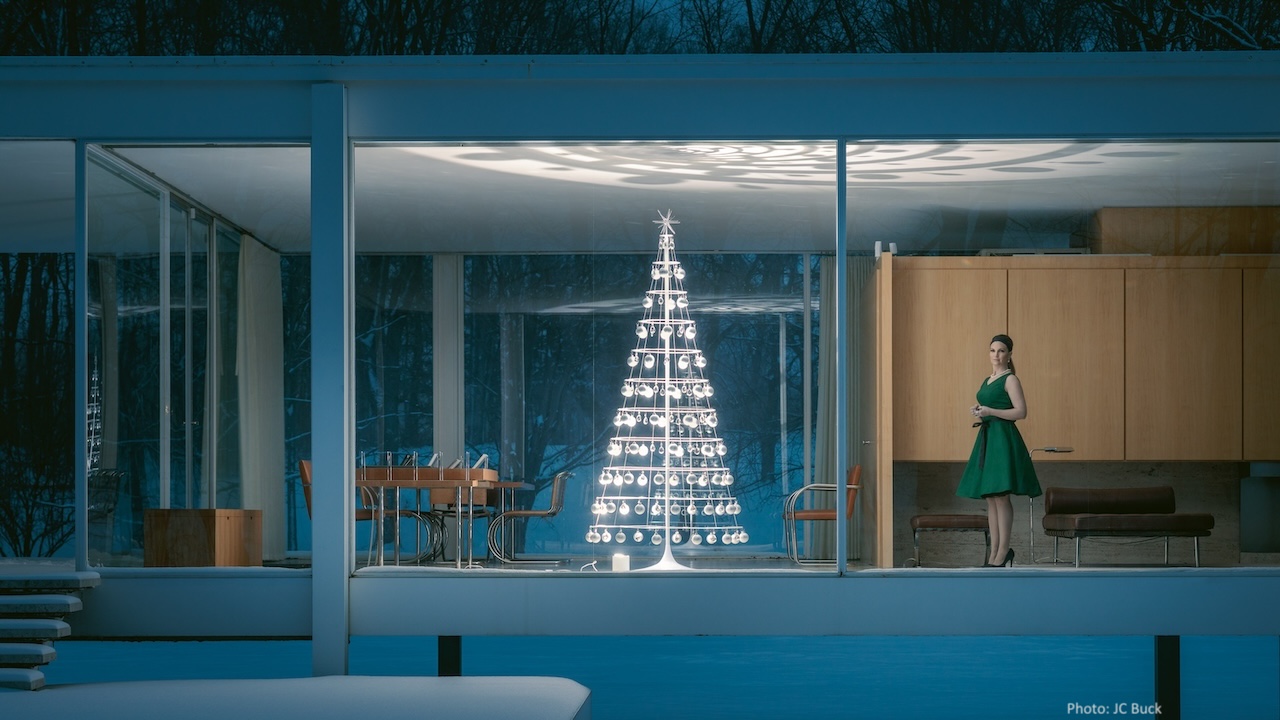
Among the companies keeping the midcentury Christmas tradition alive is Colorado-based Modern Christmas Trees. Its story dates back to 1966 when engineer and designer Lawrence “Bud” Stoecker created a minimalist Christmas tree using concentric rings. Originally crafted from cardboard, the design later evolved to incorporate acrylic rings, suspended ornaments and dramatic lighting effects, offering a striking alternative to the traditional evergreen.
Decades later, Stoecker’s grandson, Matt Bliss, revived the design and launched Modern Christmas Trees in 2011. Today, the company offers several variations of the original concept, including the full-size Classic model and the smaller Jubilee tabletop tree. With their geometric shapes, colorful ornaments and innovative lighting, the designs carry the experimental spirit of the 1960s into the present day.
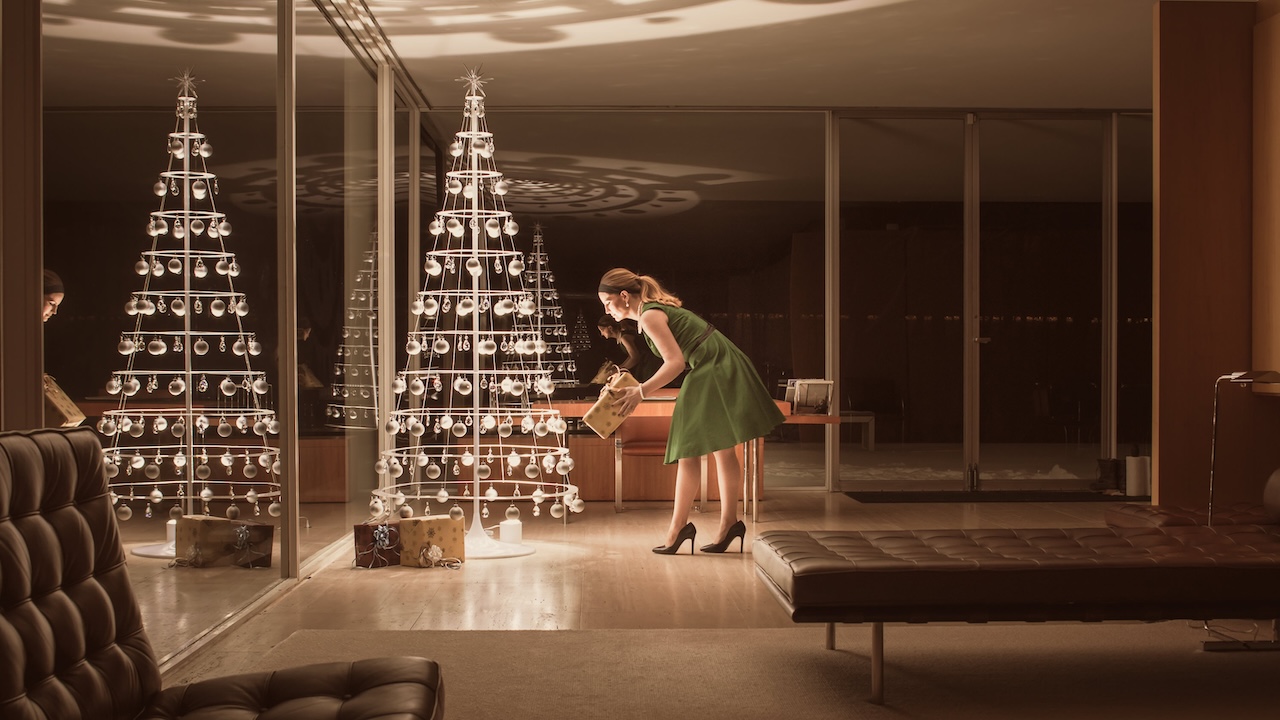
More than sixty years after aluminum trees first appeared in living rooms, the idea of reimagining the Christmas tree continues to appeal to those who appreciate modern design as well as those looking to recapture a little midcentury holiday spirit.
Written by Ken MacIntyre © Modtraveler.net / Cover photo by JC Buck: Modern Christmas Tree at the Farnsworth House