Welcome to Twin Peaks
When Twin Peaks debuted on television in 1990, its fictional Washington State setting seemed almost too perfect to be real. Yet much of what made it memorable was drawn from North Bend, Snoqualmie and Fall City, three neighboring communities in the Snoqualmie Valley, less than an hour east of Seattle. Here, misty forests and mountain scenery meet historic commercial buildings, roadside motels and railway landmarks from another era. These everyday places gave series creators David Lynch and Mark Frost the backdrop for an on-screen world that felt nostalgic, familiar and just slightly removed from reality.
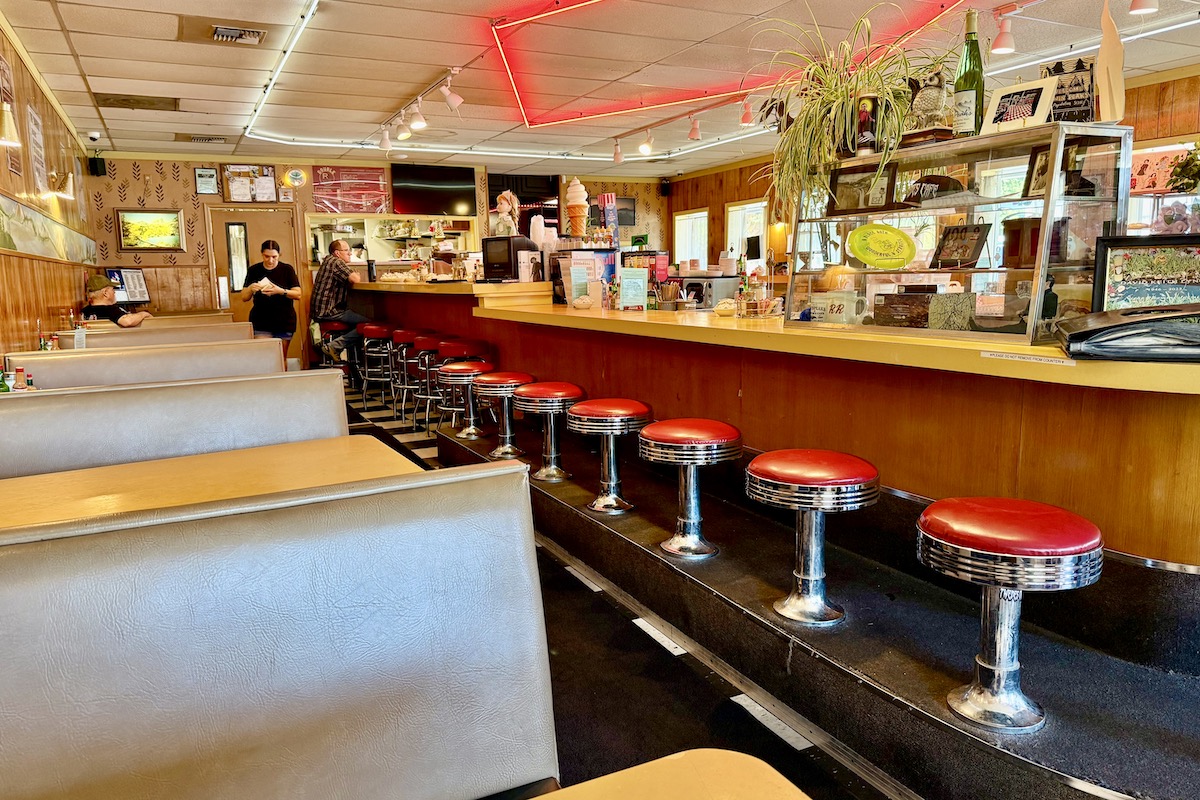
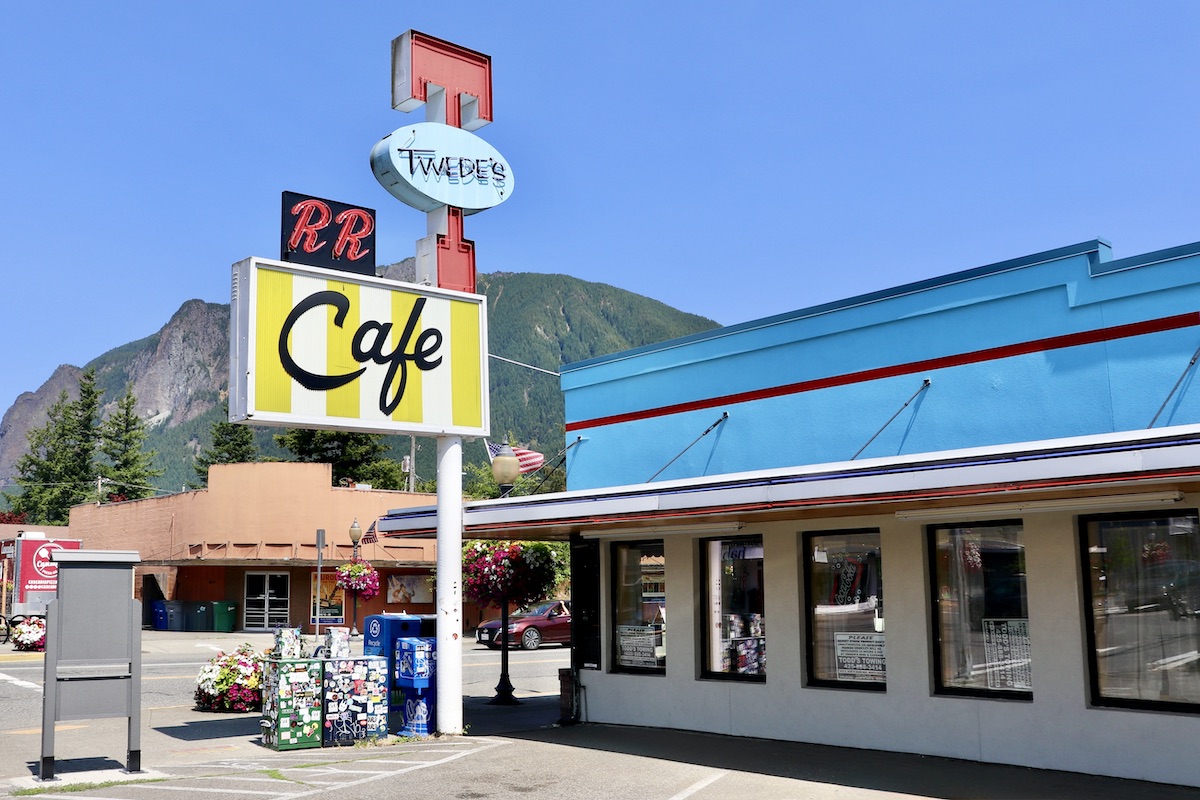
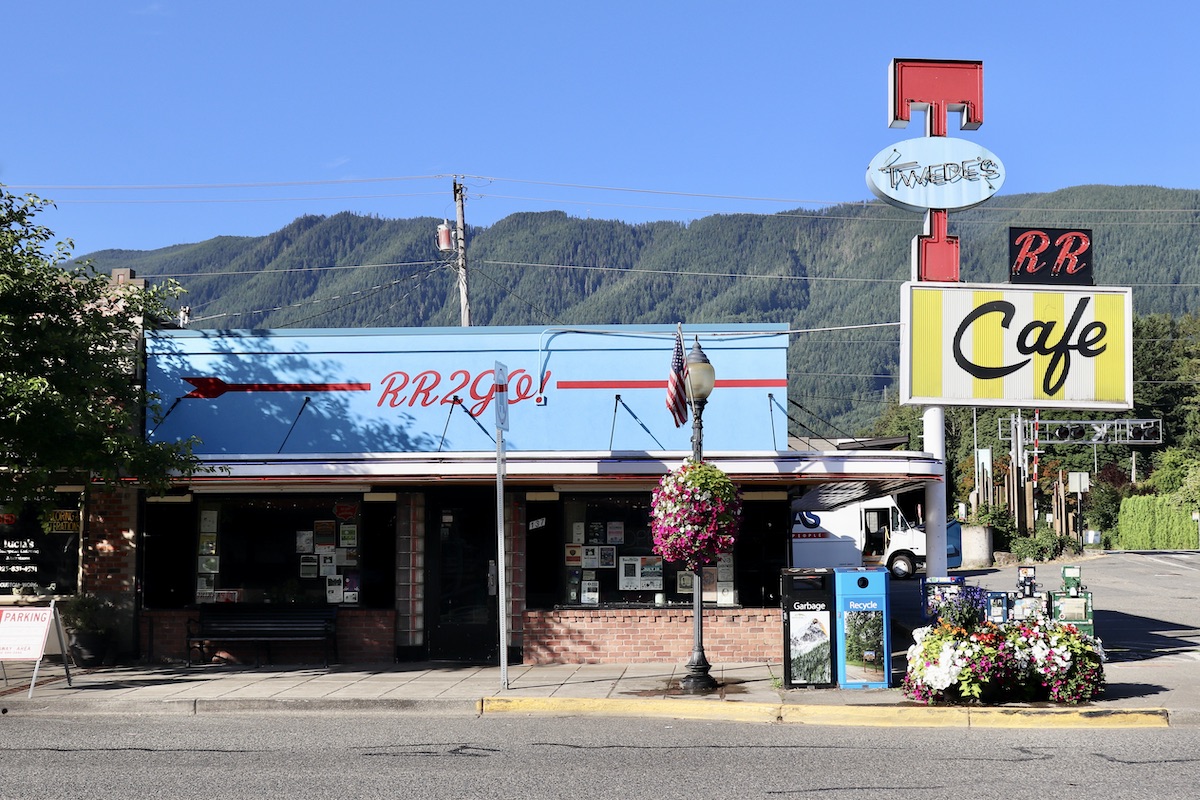
North Bend is home to one of the show’s most recognizable locations: Twede’s Cafe, the real-world inspiration for the Double R Diner. Built in 1941 as Thompson’s Cafe and known as the Mar-T Cafe when Twin Peaks premiered, its classic interior and neon sign made it one of the series’ defining locations – the place where Agent Dale Cooper enjoyed his “damn fine” coffee and cherry pie. The pilot episode was filmed inside the actual diner, while a studio recreation was used for most of the series. Lynch returned to the location for the feature film Twin Peaks: Fire Walk with Me in 1992 and again for Twin Peaks: The Return in 2017. Today, Twede’s fully embraces its connection to the show, allowing visitors to sit in a booth and experience a little piece of Twin Peaks for themselves.
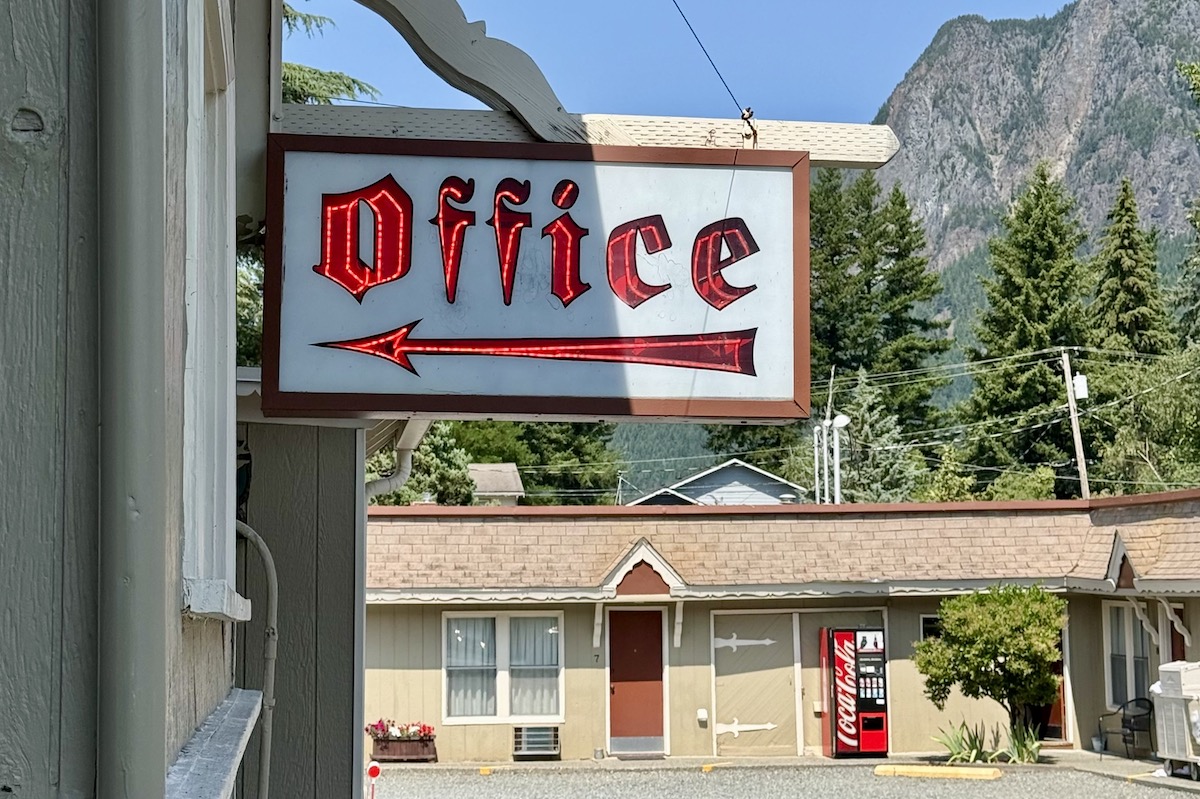
Just east of downtown, the 1950s Mt. Si Motel appeared as the Red Diamond City Motel in Fire Walk with Me, and made an encore appearance in The Return as the Dutchman’s Lodge. With its low-slung buildings, exterior room entrances and prominent roadside sign, it remains one of the valley’s best surviving reminders of the golden age of automobile travel.
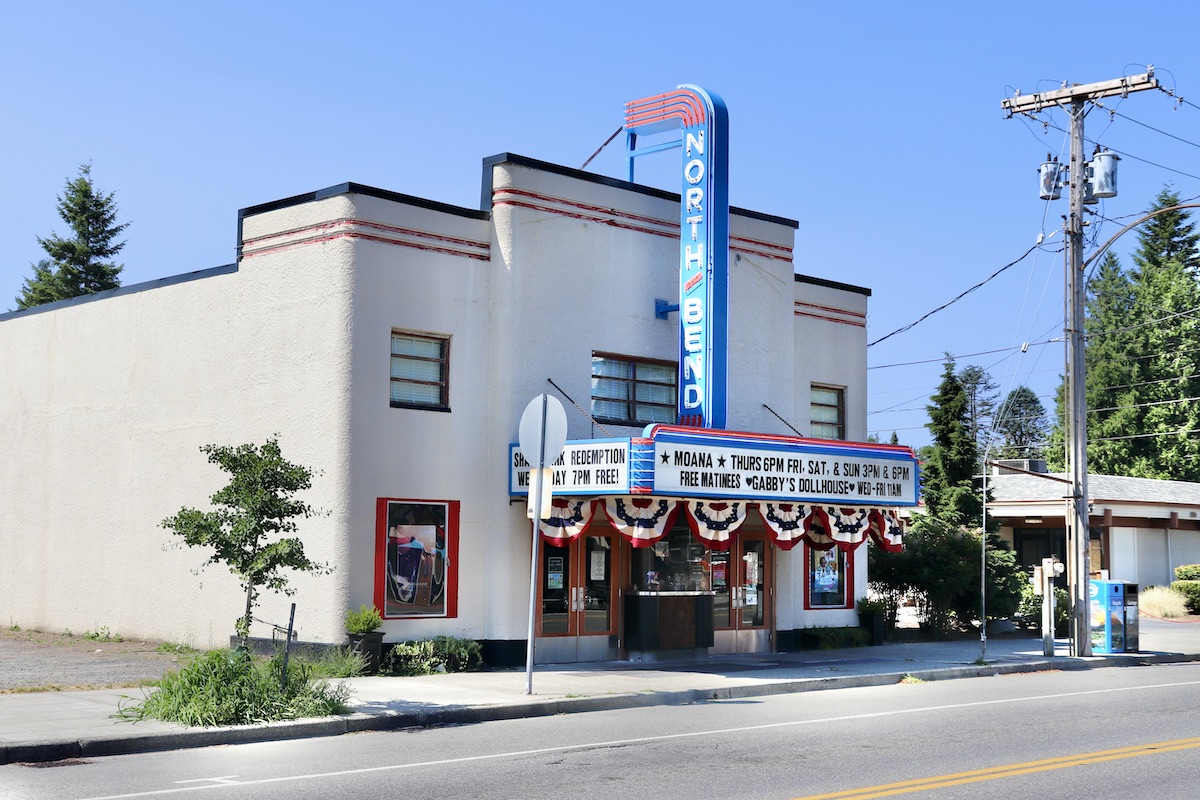
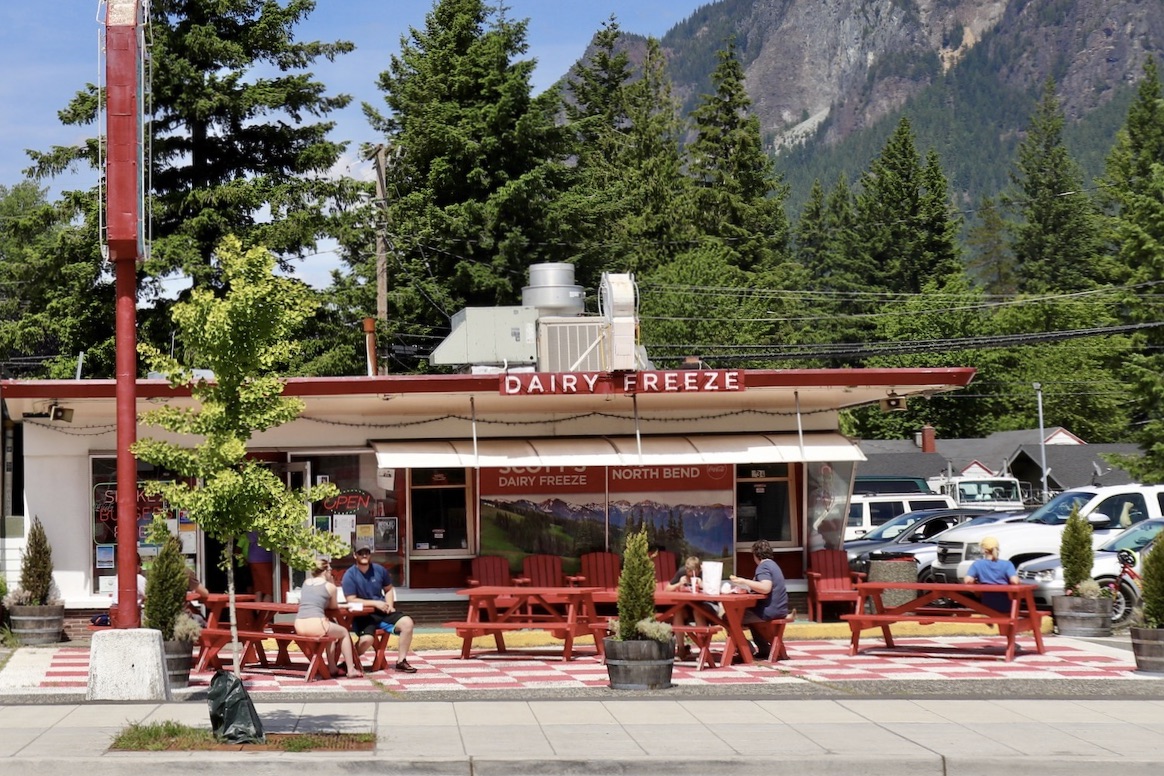
Beyond North Bend’s filming locations, there are plenty of other vintage landmarks worth exploring. The North Bend Motel has welcomed travelers since 1937, back when places like it were known as motor courts, while Scott’s Dairy Freeze has been serving up burgers, shakes and soft-serve treats since 1951. The beautifully preserved streamline moderne North Bend Theatre opened in 1941 and later became part of Twin Peaks history when it hosted the U.S. premiere of Fire Walk with Me in 1992. Concrete handprints of several cast members can be found outside the theatre, while its glowing neon marquee remains one of the town’s most recognizable landmarks.
For fans looking to take home a piece of the valley, North Bend Trading Co. and its sister store, Snoqualmie Trading Co., offer Pacific Northwest goods, local souvenirs and Twin Peaks-themed merchandise. The North Bend location is a few doors down from Twede’s Cafe, and the Snoqualmie location occupies a historic downtown storefront on Railroad Avenue.
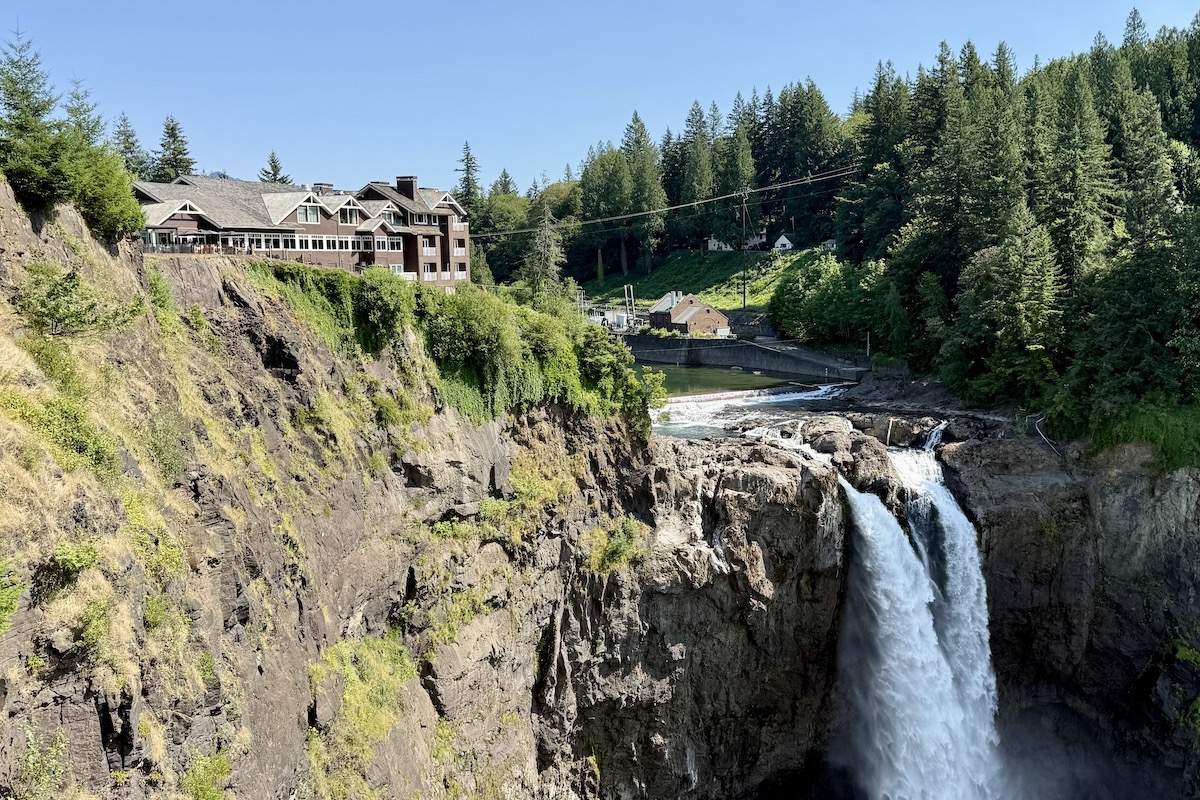
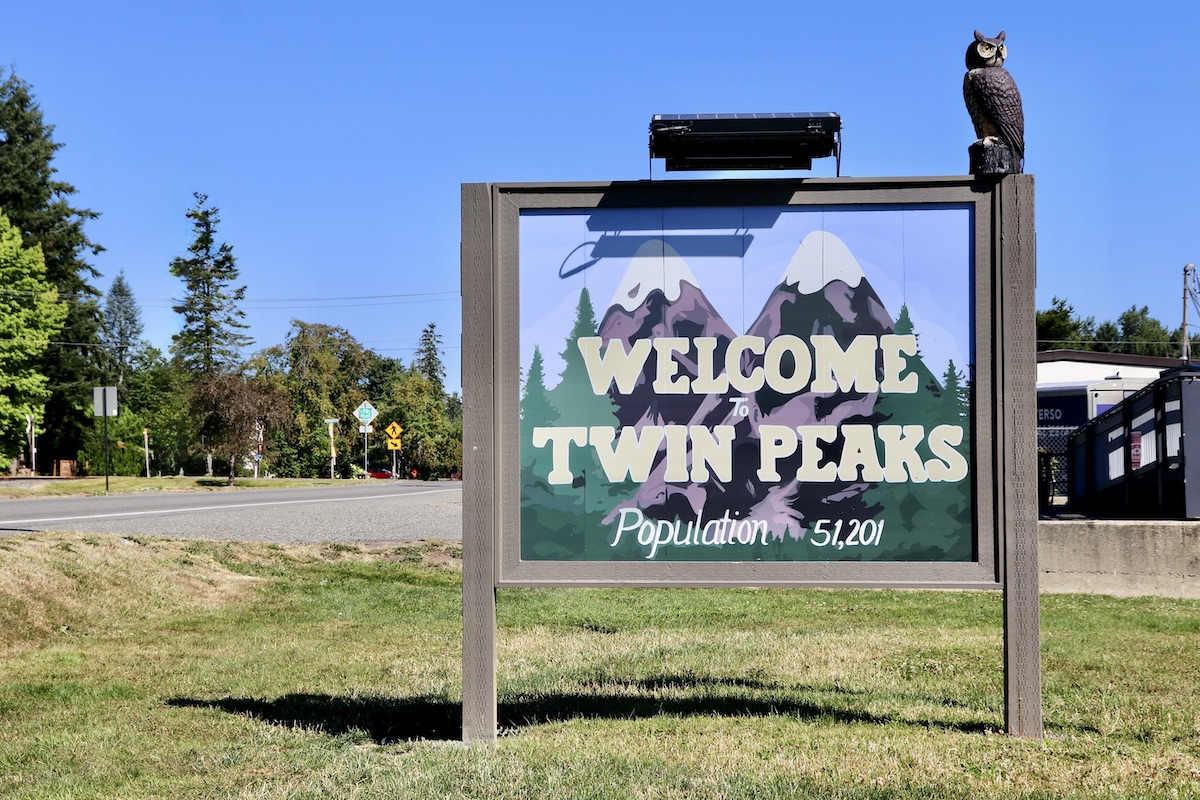
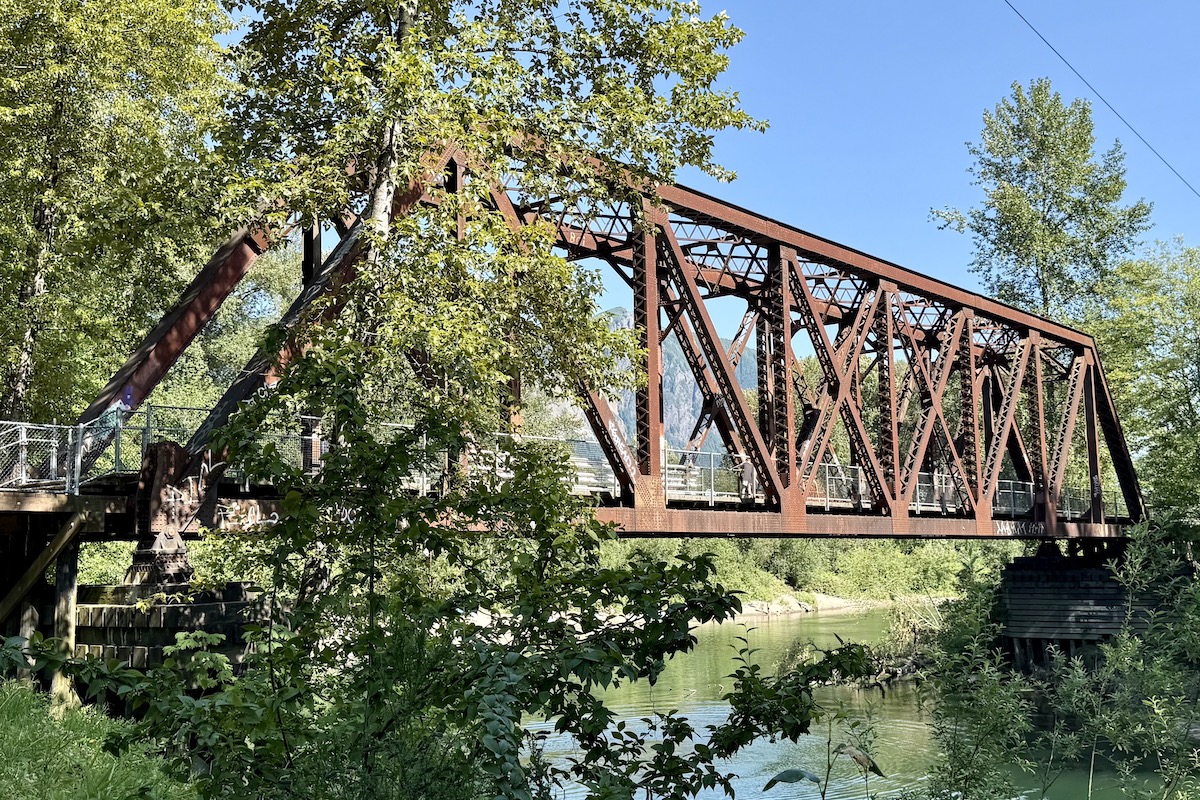
Snoqualmie is where many of the series’ most recognizable locations come together. Snoqualmie Falls became White Tail Falls, while the Salish Lodge above it supplied the exterior for the Great Northern Hotel. Nearby, the former Weyerhaeuser mill office (now part of the DirtFish Rally School) appeared as the Twin Peaks Sheriff’s Department, and the adjacent mill site stood in for the Packard Sawmill. Reining Road provided the setting for the iconic “Welcome to Twin Peaks” sign, a reproduction of which is on display outside the Jeff Warren State Farm office. Close by, the old 1916 railway trestle spanning the Snoqualmie River is remembered as the bridge crossed by Ronette Pulaski in the 1990 Twin Peaks pilot, now affectionately known to fans as “Ronette’s bridge.” The valley’s railroad history is preserved at the Northwest Railway Museum, where the restored Snoqualmie Depot and historic rail cars – some of which were featured in the series’ first season – offer a glimpse into the region’s past.
Snoqualmie’s former Riverside Mobile Home Park appeared as the Fat Trout Trailer Park in Fire Walk with Me. Although the park has since been demolished, its empty riverside site remains another stop for dedicated fans. A different mobile home park on Bendigo Boulevard in North Bend became the new Fat Trout when the location reappeared in The Return.
Finally, continue west to Fall City, where the century-old Roadhouse Restaurant and Inn supplied the exterior of the show’s Roadhouse, also known as the Bang Bang Bar.
Together, these locations show how Lynch transformed the real communities of North Bend, Snoqualmie and Fall City into one of television’s most unforgettable settings. The area’s diners, motels, neon signs and roadside landmarks are still here, set against a backdrop of forests and mountains that hasn’t changed much in decades. Spend a little time in the Snoqualmie Valley and it’s easy to understand why Twin Peaks still feels less like fiction and more like a place that has always existed.
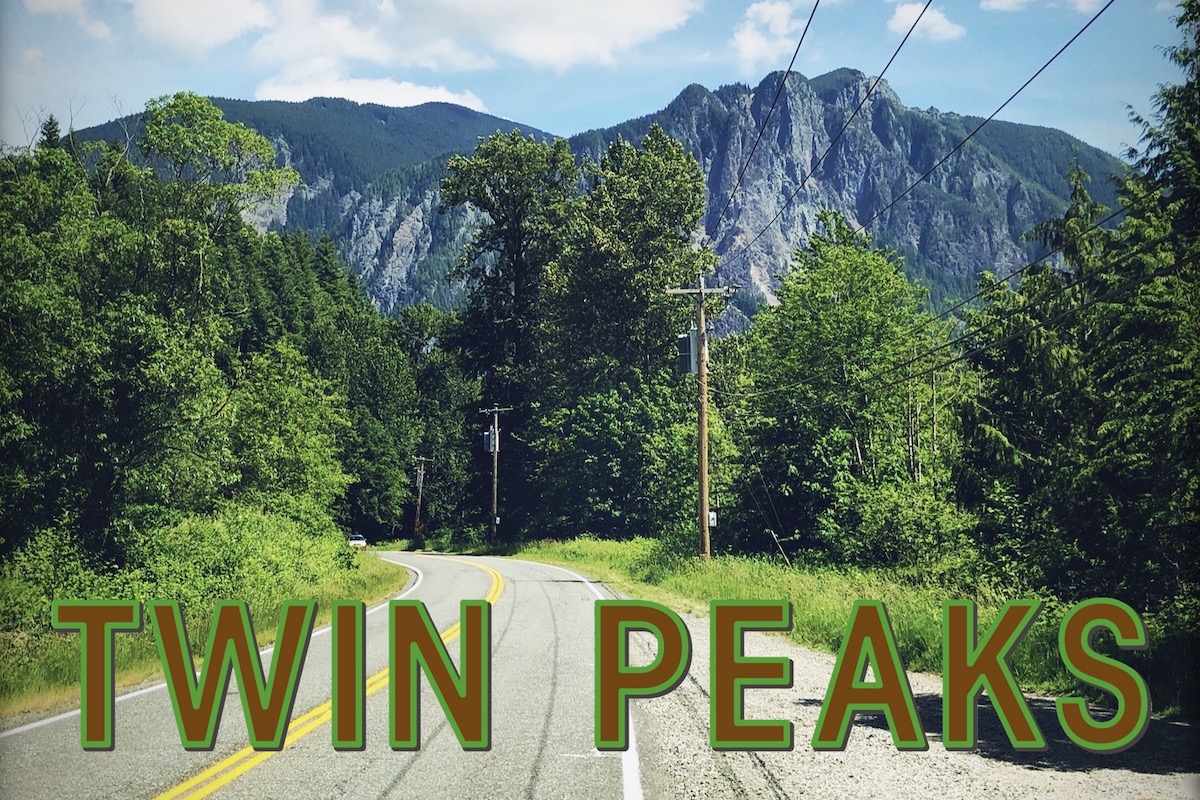
Since 1992, fans have returned to the Snoqualmie Valley for an annual Twin Peaks festival that celebrates the series and the real-world locations that brought it to life. It includes location tours, cast and crew appearances, screenings and events throughout North Bend, Snoqualmie and surrounding communities. More than three decades after the show first aired, the festival remains a reminder of the lasting impact of Twin Peaks and the enduring appeal of the Snoqualmie Valley. For details, visit The Real Twin Peaks.
For information on the Snoqualmie Valley, visit their Chamber of Commerce website.
Written and photographed by Ken MacIntyre, © Modtraveler.net