 Las Vegas

Exploring Midcentury Modern on Hawaii’s Big Island
by Ken MacIntyre
January 3, 2026 (Hawaii) – The Big Island doesn’t announce its midcentury heritage with flashy towers or dense resort strips like Honolulu. Instead, it reveals itself through open air lobbies, lava rock walls and buildings designed to catch breezes rather than attention. From Kona’s post-statehood boom to Kohala’s tropical modernism and Hilo’s civic and roadside classics, here are some modernist highlights you can look forward to when exploring the Big Island of Hawaii.
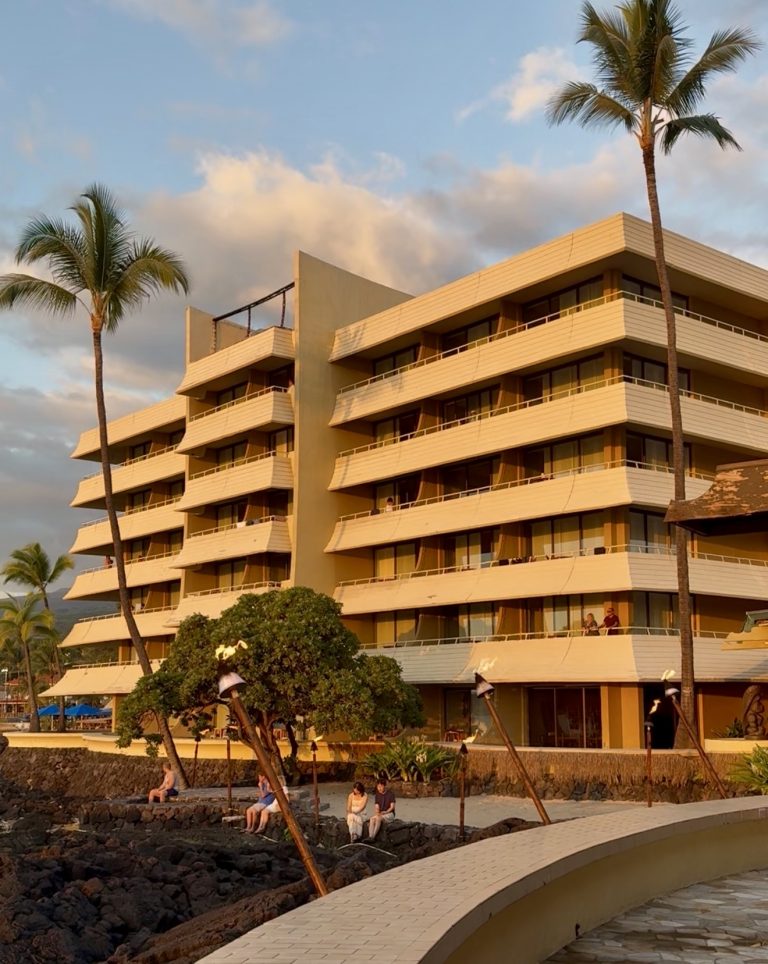
Royal Kona Resort (1968) at sunset
Post-Statehood Modernism on the Lava Coast
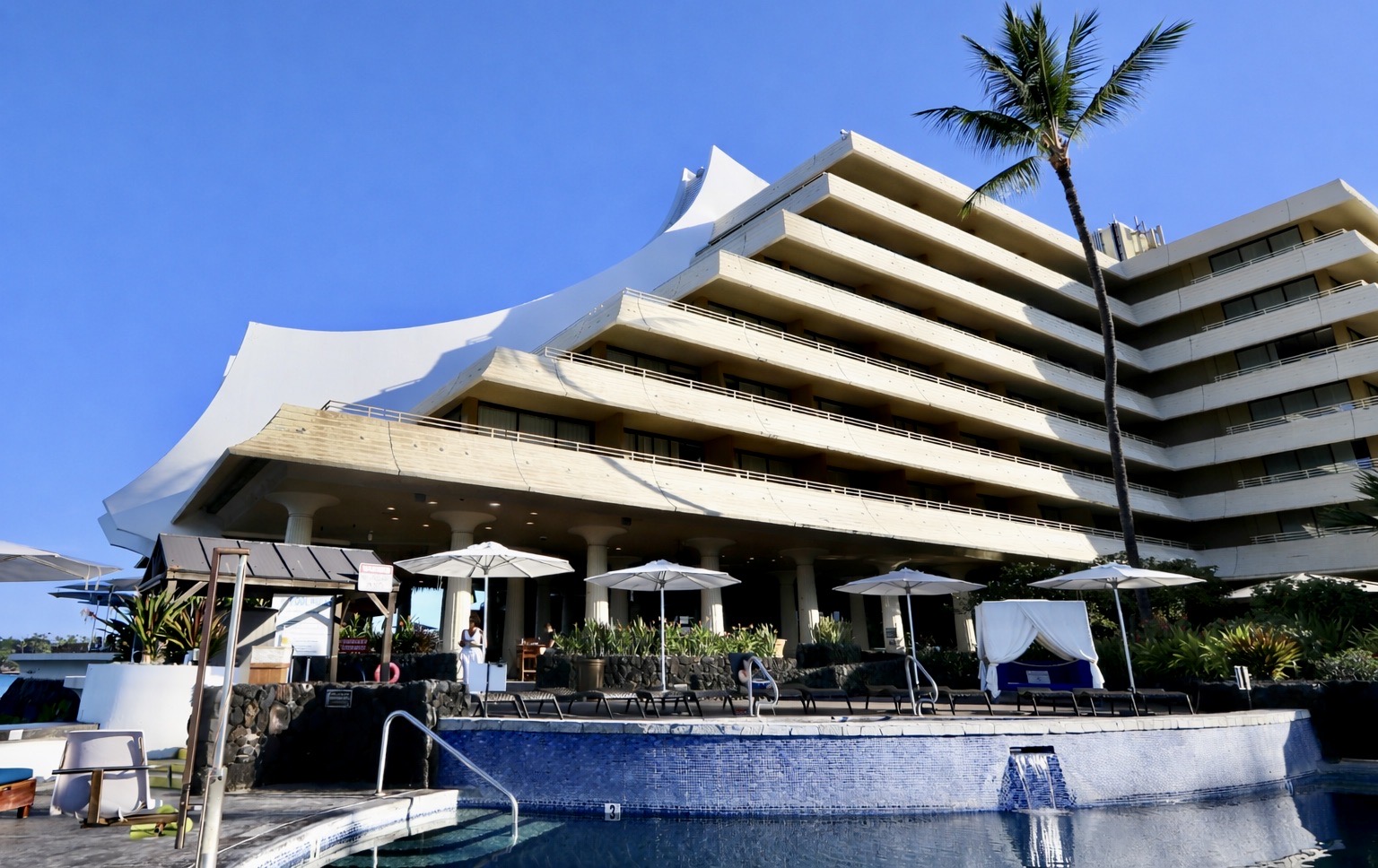
Along Ali’I Drive, where vast lava fields meet the ocean, Kona’s midcentury identity is inseparable from its rise in tourism in the late 1960s. Many smaller modernist buildings dot the main drive through Kailua-Kona on the island’s leeward side but the most prominent survivor of this era is the Royal Kona Resort (pictured above), originally opened as the Kona Hilton in 1968. Designed by George “Pete” Wimberly, the resort exemplifies tropical modernism with its open-air ground level, elevated guest towers and tiki flourishes throughout. While updated over the years, the Kona Resort still embodies the spirit of late 1960s Hawaii.
Right next door is Huggo’s Restaurant. Built over the coastline, this island favorite has been serving up fresh local cuisine and the best Mai Tais since 1969.
Further along Ali’I Drive at Hualalai Road stands Uncle Billy’s Kona Bay Hotel, a classic example of 1960s Hawaiiana, from thatched roofs to breeze blocks and tiki drinks that never end. Sadly, Uncle Billy’s closed a while back but will be re-opening under the auspices of Hampton Inn by Hilton, and while a chain hotel brand normally wouldn’t instill confidence, this writer has seen the results and it promises classic midcentury tiki vibes when it re-opens later this year.
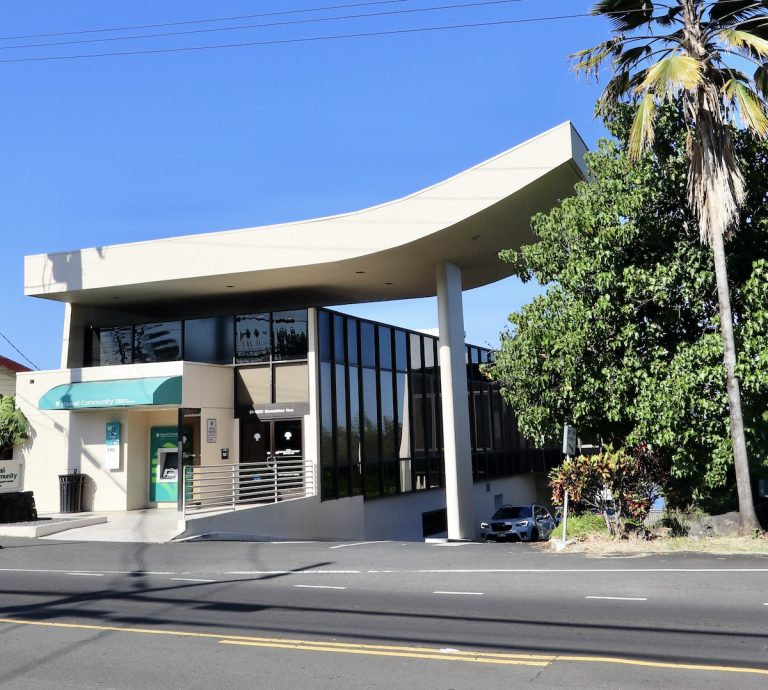
Hawaii Community Federal Credit Union, 1973
Just south of Kona, the town of Kainaliu boasts several post & beam commercial spaces as well as the So’K Coffee Station (a former 1960s Union 76 gas station converted to a drive-thru). Sandy’s Drive-In is also a must for freshly made fare, serving locals since 1966. And there’s even the Aloha Theatre, built in 1932 by Jitsuo Tanimoto, which highlights the island’s layered architectural history that modernism would later expand upon.
South of Kainaliu, in Kealakekua, stands the Hawaii Community Federal Credit Union, built in 1973 and designed by Frederick K. Lesan. Its one of several modernist banks in the area, but the only one with an upward flaring cantilevered roof which was meant to symbolize an ocean wave, a deliberate nod to environment.
Further south, at Pu’uhonua o Honaunau, or, the Place of Refuge, carved tikis stand as quiet guides to what this place once was; a sanctuary where anyone who broke sacred law could flee and be spared execution. Though certainly not modernist, visitors will leave with a tiki fix and hopefully a deeper understanding that this shoreline was once a literal boundary between life and death.
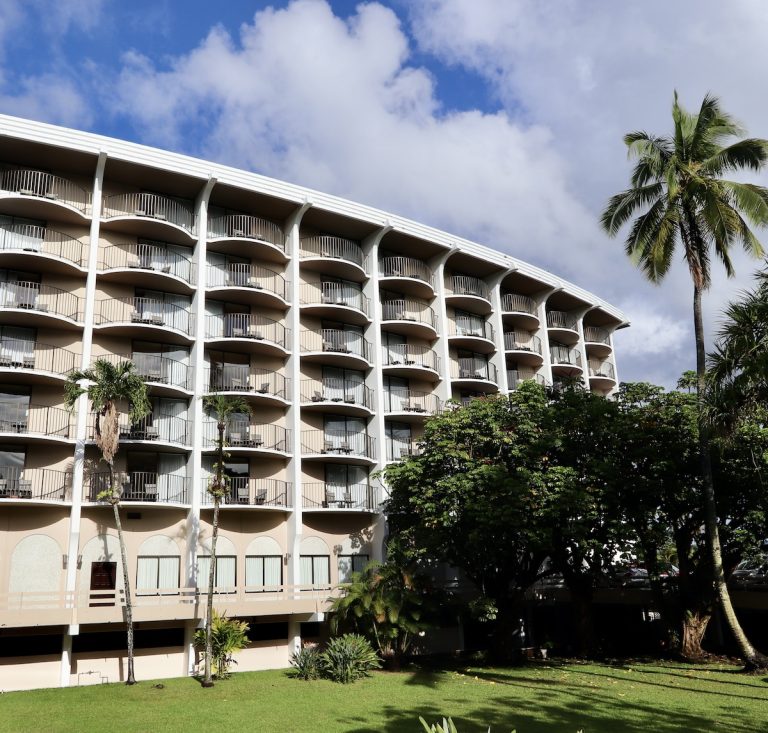
Hilo Hawaiian Hotel, 1974
Hilo’s Civic Modernism and Roadside Classics
On the Big Island’s lush windward side, a different modernist story is revealed. Less resort driven (although, there are a few) and more civic, commercial and community-oriented, Hilo’s midcentury landmarks are no less intriguing than those on the island’s leeward side.
One of Hilo’s most significant modernist buildings is the Hawaii County Building, completed in 1966 by Wilson and Associates, with project architect Shizuo Oka. Its black lava rock walls, cast stone, copper trim and glass reflects a Brutalist-leaning tropical modern style well suited to Hilo’s climate and volcanic identity.
Along Banyan Drive stands the Hilo Hawaiian Hotel, built in 1974 and designed by Ernest Hara. Rising eight stories above Hilo Bay, the hotel represents a later phase of tropical modernism yet still orients itself around airflow and views. Down the street, Uncle Billy’s Hilo Bay Hotel was built a decade earlier and embodied the tiki era and motor lodge aesthetic that once defined Banyan Drive. Sadly, Uncle Billy’s is in the process of being demolished to make way for a future mixed-use development. Its memory reflects Hawaii’s post war tourism boom, a time when optimism and Polynesian fantasy converged.
Hilo’s roadside modernism is alive and well at places like Ken’s House of Pancakes, which has been serving ‘em up since 1971. While architecturally modest, its low-slung form, neon signage and 24-hour diner culture captures the spirit of timeless Americana in the tropics.
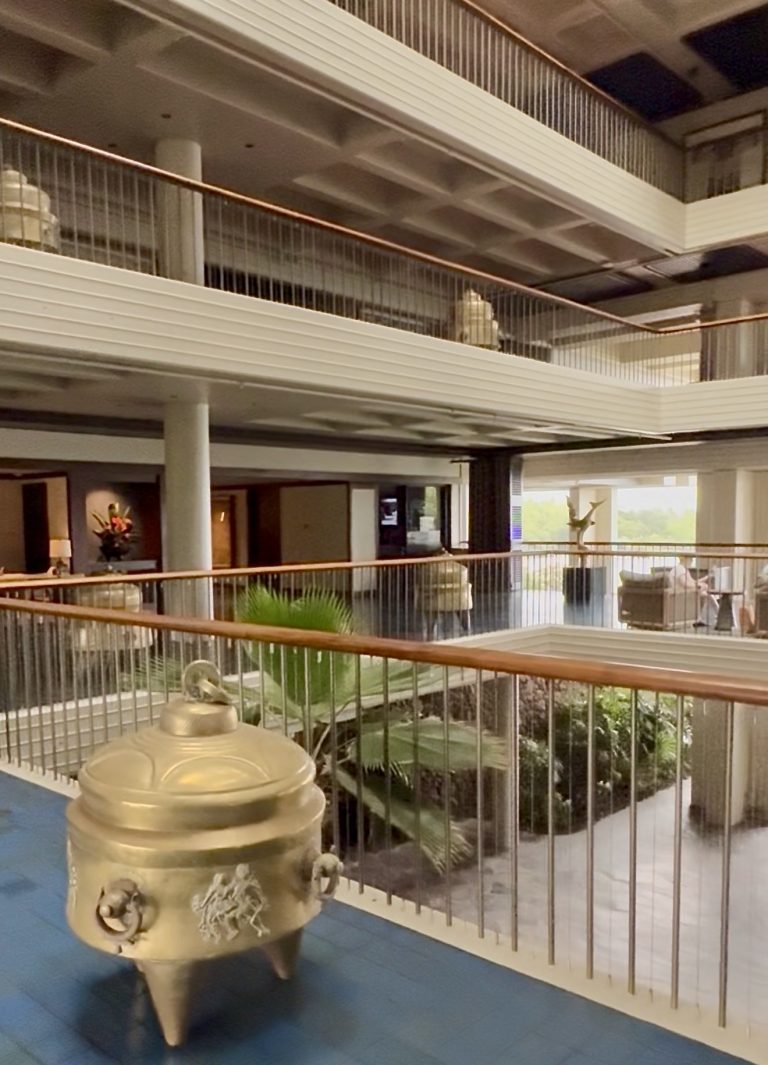
Mauna Kea Beach Hotel, 1965
Anchoring downtown Hilo is the Palace Theatre, built in 1925 by Davis & Fishbourne. Though predating the modernist movement, its restored neon marquee and continued community use highlight how earlier architectural landmarks continue to coexist with those from the midcentury.
Tropical Modernism Perfected on the Kohala Coast
If Kona reflects tourism’s expansion in Hawaii, the Kohala Coast represents its architectural refinement, and no property better captures this than the Mauna Kea Beach Hotel. Designed by Edward Bassett of Skidmore, Owings and Merrill, with interiors by Davis Allen, when the hotel opened in 1965 it set a new standard for resort architecture, worldwide. With clean lines, deep overhangs and lava-rock rock walls, the Mauna Kea’s open air lobby blurs all boundaries of indoor and outdoor living, framing the Pacific ocean like a piece of art. Awarded an AIA Honor Award in 1966, the Mauna Kea helped define what midcentury modernism could, and would, become in Hawaii. Nearby resorts followed, favoring open-air concepts, horizontal shapes and natural materials.
On the Big Island, midcentury modern architecture is also uniquely Hawaiian, shaped by breeze, shade, lava and lanais. From Kona’s lava-lined resorts to Hilo’s civic and roadside classics, to Kohala’s architectural masterpieces, the island offers a deeply rewarding journey for travelers who know that the best modernism often whispers rather than shouts.
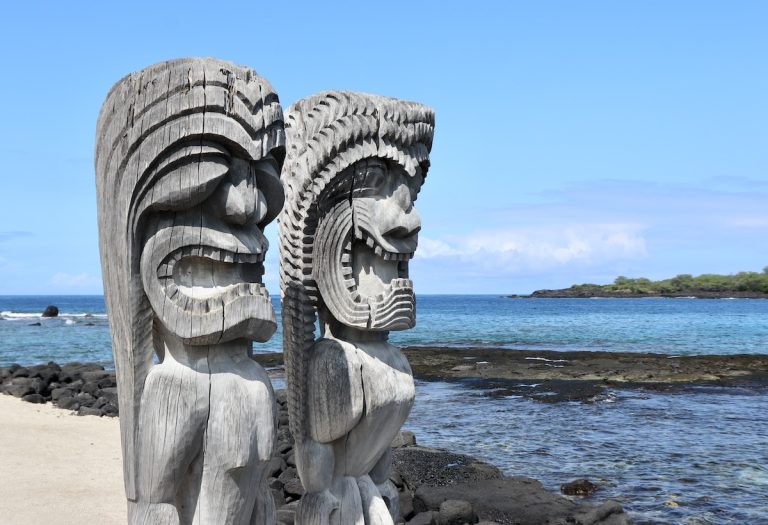
Pu’uhonua o Honaunau / The Place of Refuge
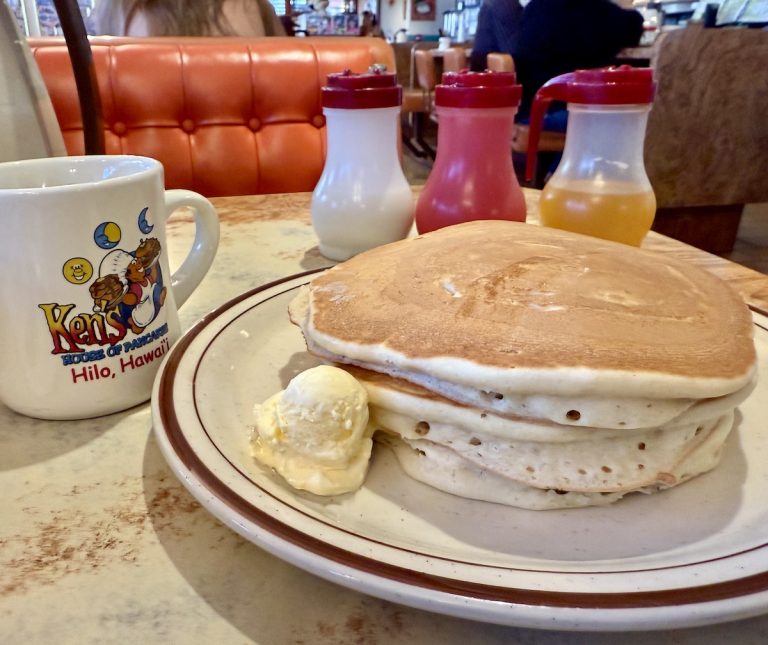
Ken’s House of Pancakes, 1971